The AI infrastructure industry has spent years focused on one primary challenge: scaling bandwidth. But as AI fabrics grow, operators are discovering a second challenge that is becoming equally important — operational visibility. A 300MW cluster today houses over one million optical transceivers. At next-generation 4.5GW scale, that number exceeds 10 million, and even a statistically rare failure rate produces a link flap every minute.
A single unstable link can stall training jobs, corrupt model runs, and cascade into widespread disruption costing hundreds of thousands of dollars per event. Conventional monitoring tools were never built for this — designed for the internet, they address packet loss and routing failures, not the optical physical layer of a massive AI fabric. At Credo, we believe the next phase of AI infrastructure requires optical performance and observability to converge.
ZeroFlap (ZF) Optics: Transceivers That Tell You What’s Wrong
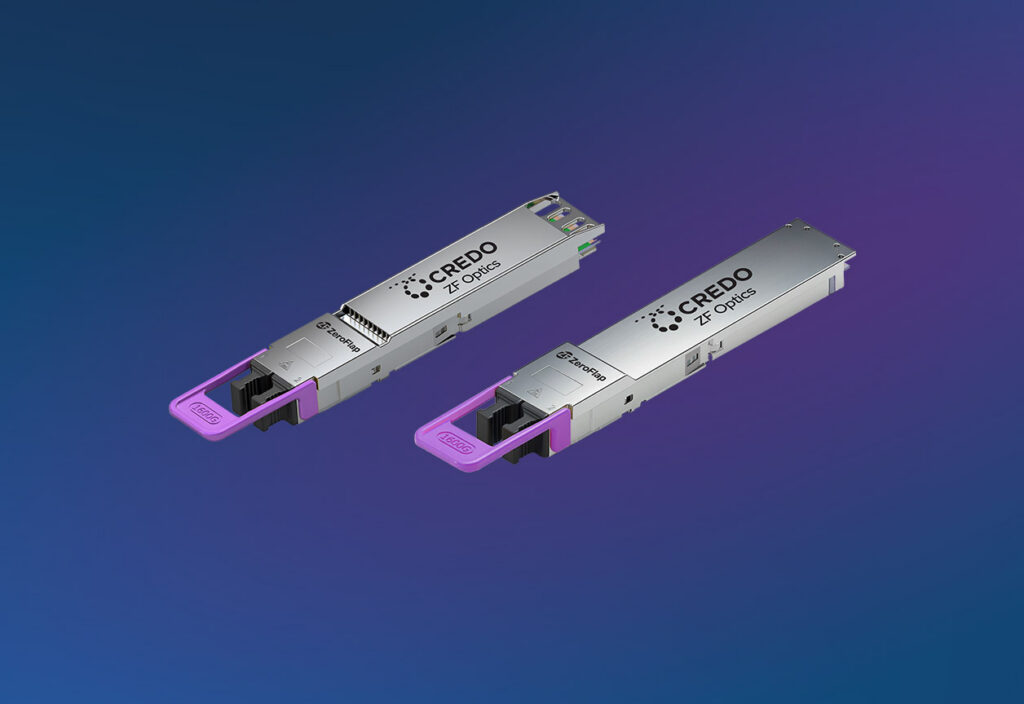
ZF Optics transforms the transceiver from a passive transport device into an active source of operational insight. Supporting 400G, 800G, and 1.6T speeds across a broad range of form factors, ZF Optics are purpose-built for the performance and reliability demands of AI networking.
Unlike standard transceivers, ZF Optics continuously monitor link conditions at both the host and media side, logging telemetry in non-volatile on-transceiver storage. This creates a full historical record of every link event — a built-in network time machine that enables precise root cause analysis without relying on external logging infrastructure. ZF transceivers are engineered for optical hardening, can self-diagnose potential damage before it leads to failure, and support remote firmware updates delivered over the fiber link itself with no service interruption — keeping clusters running while staying current.
PILOT: One Dashboard to View Your AI Cluster
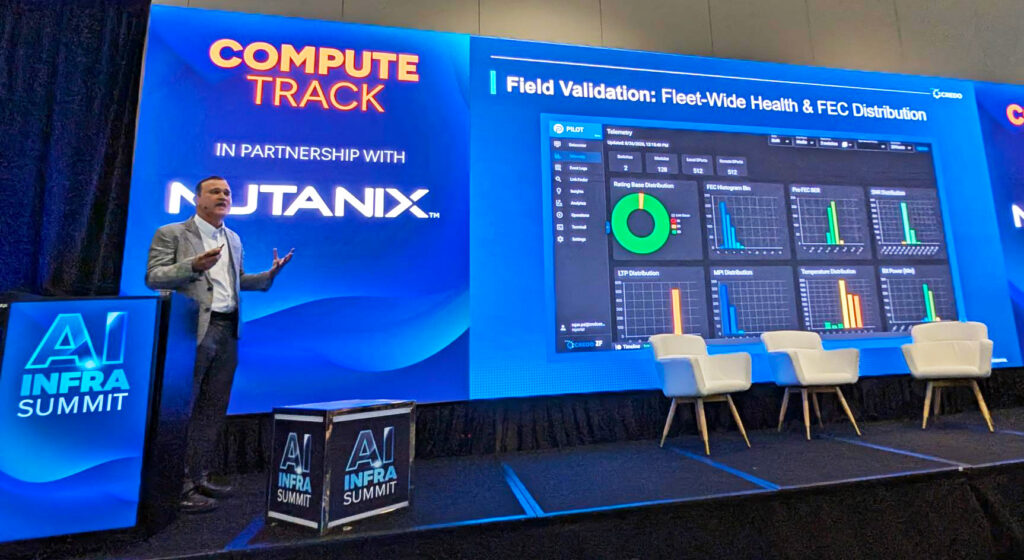
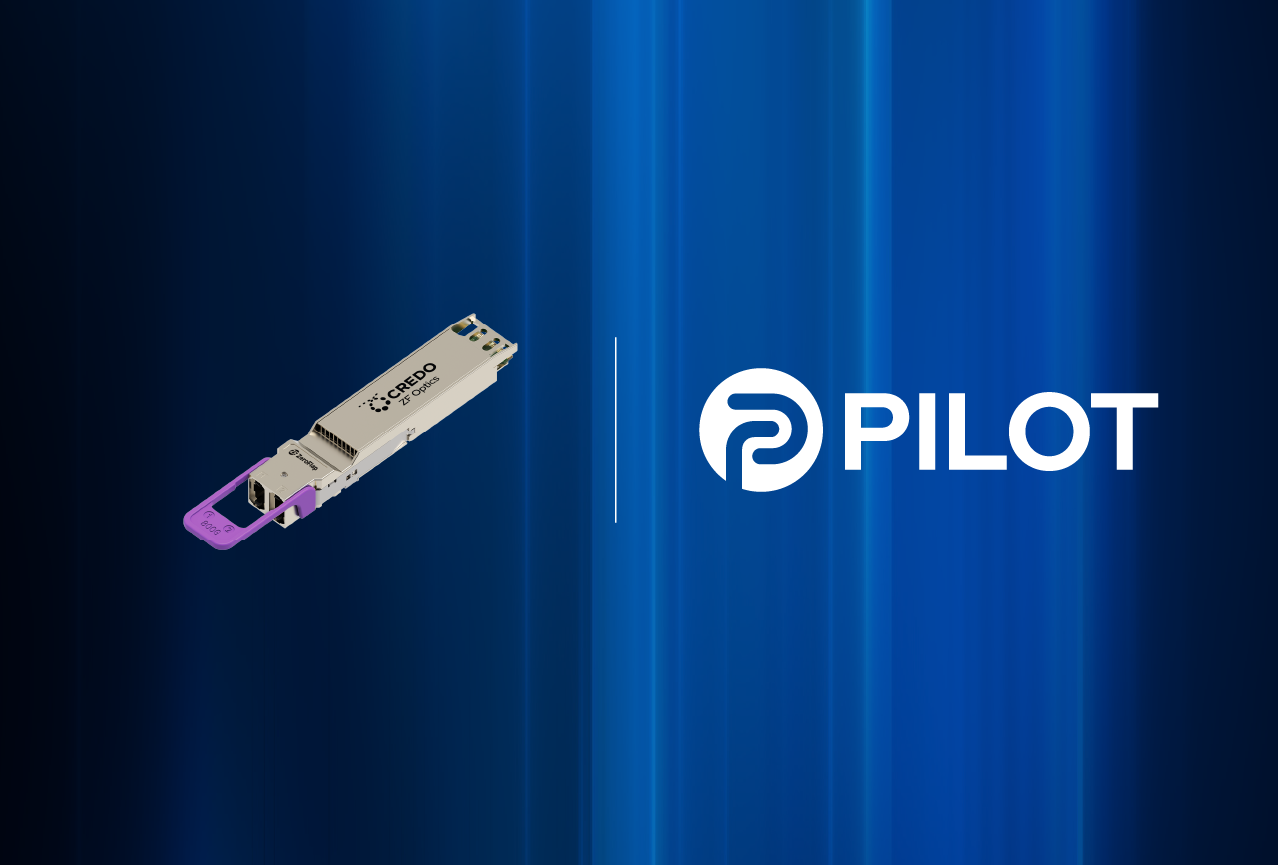
PILOT, the Credo telemetry and observability platform, transforms raw optical telemetry into cluster-wide intelligence. Rather than surfacing isolated link alerts, PILOT aggregates telemetry from every ZF transceiver across the fabric and presents it as a unified analytics suite, giving system administrators unprecedented visibility into the health of their AI clusters from a single interface. At the heart of PILOT is its Telemetry Dashboard, which displays statistical distributions across key link metrics, including FEC histogram bins, SNR distribution, optical power levels, and link counters, giving operators an immediate, cluster-wide picture of network health. Instead of investigating links one by one, operators can instantly see how the entire population of transceivers is performing, spotting outliers, identifying emerging trends, and pinpointing problem areas before they cascade into failures.
PILOT also provides drill-down views at the switch and individual cable link level, allowing teams to move quickly from a cluster-wide anomaly to the specific transceiver causing it. A composite Link Health Score combines multiple telemetry metrics into a single at-a-glance rating, with programmable thresholds that teams can tune to their own operational standards. The result is a platform that not only monitors the network but actively helps operators understand it, turning the optical layer from a black box into a transparent, manageable, and predictable system.
Built for What’s Next
As AI clusters continue to scale, operators will demand more than bandwidth and power efficiency from their optical interconnects. They will expect intelligence, visibility, and a network that helps identify problems before workloads are impacted. The future of AI networking is not just faster optics — it is optics and observability working together to create a more resilient, efficient, and scalable AI infrastructure.
Ready to stop link flaps before they stop your workloads? Connect with Credo, or email sales@credosemi.com.