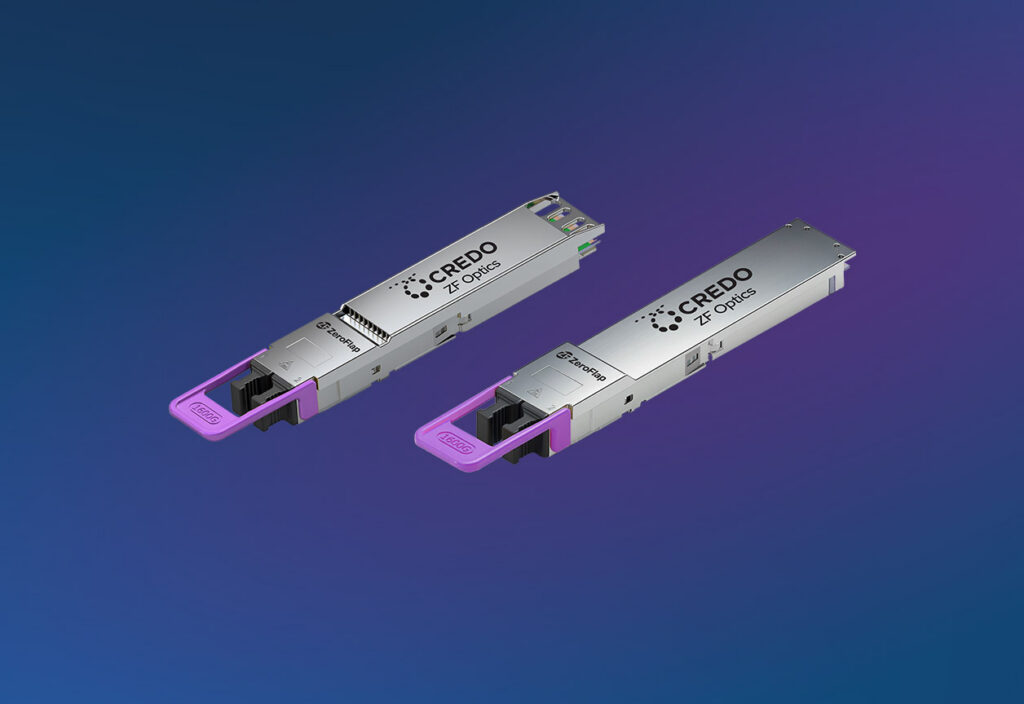
Recognized for both its business performance and its product innovation, Credo won two honors at Light Reading’s 22nd Annual Leading Lights Awards — Company of the Year and Most Innovative Optical Networking Product or Solution (Components) for its ZeroFlap optical transceivers.
The Leading Lights by Light Reading is one of the most closely watched awards programs in communications and networking. This year’s competition reflected that: winners were chosen from 151 finalists across 30 categories, evaluated by a judging panel of industry analysts from firms including Dell’Oro Group, Omdia, Ookla, Opensignal and AvidThink, among others. Every entry was scored by the panel and checked against public reporting and submitted data before winners were finalized.
Light Reading’s Editor-in-Chief and Leading Lights Jury Chairman, Phil Harvey, put it like this: “This year’s competition was very steep. Credo is helping redefine the world of telecom as it expands to include AI inference, agentic communications and a new world of advanced applications. This honor signals their commitment to progress, ingenuity and sharp execution, and makes their work an indelible force in our industry.”
Read this year’s Leading Lights announcement here.
Company of the Year
Credo won the top category over a crowded field of finalists including Amphenol Network Solutions, the Fiber Broadband Association, LotusFlare, Nordic Semiconductor, SiTime and Vecima.
Light Reading stated in the awards announcement that Credo’s growth was “off the charts” this year, and that its fast pace of new product launches reflected exactly the innovation and execution the category was designed to recognize.
Here at Credo, we see this award as a confirmation of the belief behind our rapid growth: as AI clusters get bigger, connectivity is about much more than bandwidth. We also believe AI infrastructure will combine optical and copper interconnects to link systems over different distances and configurations.
This year we took major steps to put that belief into action — acquiring DustPhotonics to bring silicon photonics in-house, and shipping Cardinal and Robin, our newest optical DSPs built for AI-scale clusters. Connectivity is the growth story, and we intend to keep pushing it forward.
Most Innovative Optical Networking Product or Solution (Components): ZeroFlap Optical Transceivers
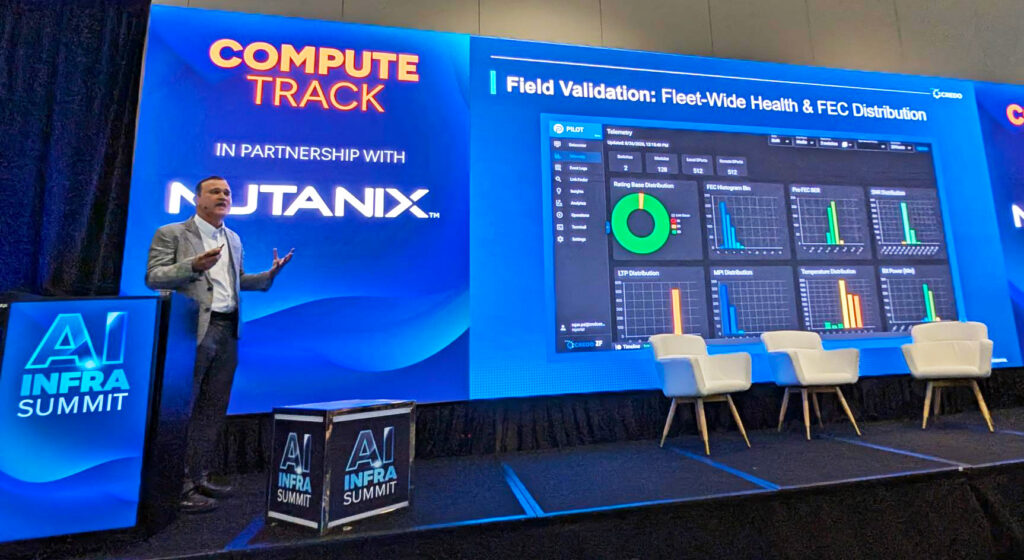
In the components category — a field that also included entries from Ciena, Marvell, NewPhotonics and OpenLight Photonics — judges pointed to the reliability engineering built into our ZeroFlap solutions: on-module telemetry, non-volatile event logging, and the ability to pull a degrading link out of service before it fails. Light Reading noted it was the only entry in the category already shipping to named customers and being standardized through the Open Compute Project’s optics reliability workstream.
That reliability focus is the whole point of the product. Link flaps — brief optical connection drops — are a persistent source of downtime in AI clusters, and Credo built our ZeroFlap products specifically to predict and prevent them, aiming to cut the kind of interruptions that slow training runs and delay time to first token. ZeroFlap AECs and ZF optical transceivers anchor Credo’s connectivity portfolio alongside the DSPs, silicon photonics based and interconnect technology mentioned above.
The Bigger Picture
“Receiving two Leading Lights Awards is a tremendous honor for Credo,” said Don Barnetson, Senior Vice President and Head of Product at Credo. “These awards reflect our commitment to solving some of the industry’s most challenging connectivity issues. We remain committed to advancing the high-performance, reliable and power-efficient solutions needed to support the future of AI infrastructure.”
The awards we won are more than shining additions to our trophy case — they’re strong signals that our peers see the industry heading where we do: the system-level approach will become increasingly important as AI networks move to 1.6T and 3.2T solutions. That’s the thesis we’re building toward, and this year’s strong start is early proof of it. Second-quarter fiscal 2027 revenue guidance of $525 million to $535 million suggests the momentum is continuing.
We’re proud of the recognition, and even more focused on shipping the next generation of the technology behind it.