An AI cluster is only as fast as its least reliable link. As clusters scale, a single flapping optical link doesn’t just cause a network alert — it stalls a training run, delays a job’s first output token, and burns GPU-hours that never should have been idle.
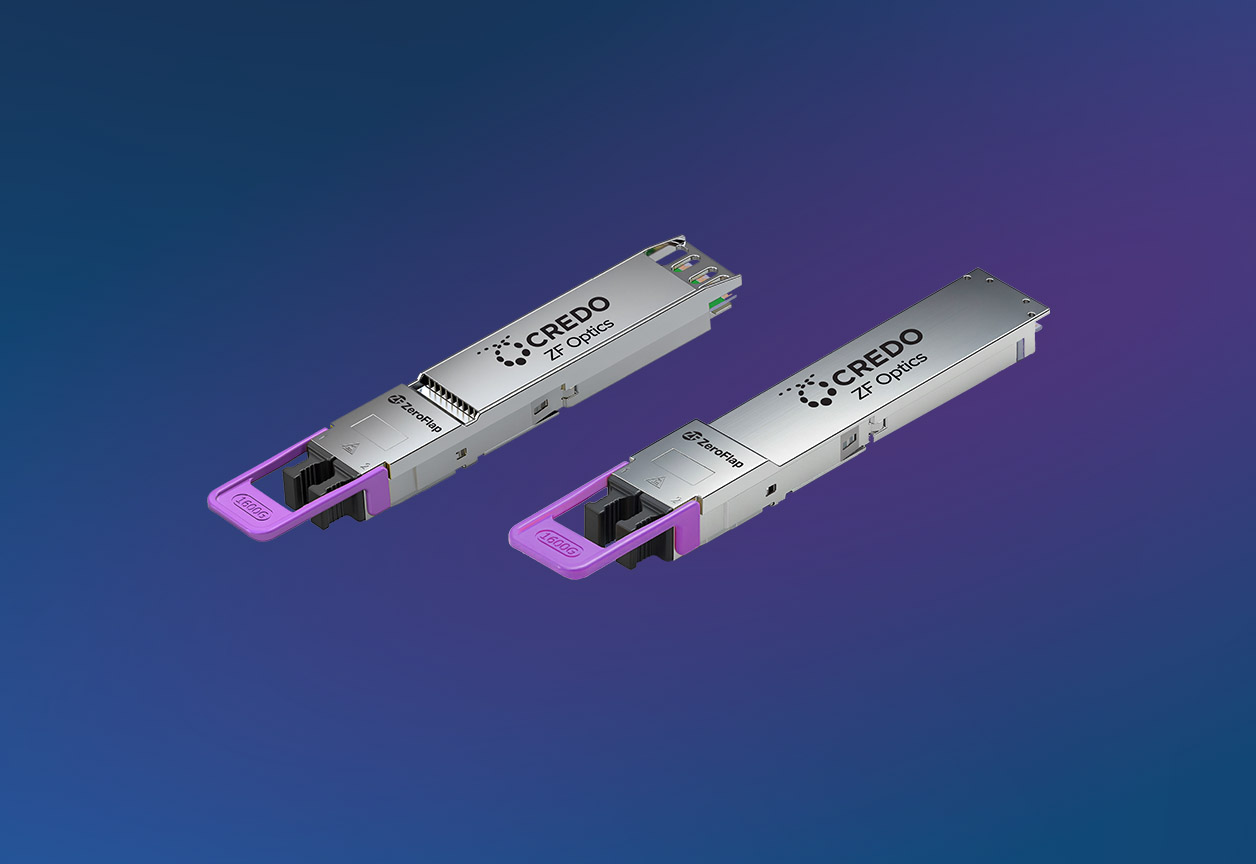
That’s the problem Credo ZeroFlap Optics was built to solve, and today we’re extending that solution further: our 224G-based 1.6T transceivers — spanning 2xDR4, 2xFR4, and DR8 form factors — bring the ZeroFlap reliability architecture to our highest port speed yet. Combined with our existing 200G, 400G, and 800G optics, the ZeroFlap family covers the full range of speeds an AI fabric will pass through as it scales.
Why This Combination Matters
The 1.6T ZeroFlap transceivers are the first products to bring together three important technologies: our field-proven optical DSP, the Kfir200 silicon photonics PIC, and the latest-generation PILOT diagnostics and analytics platform.
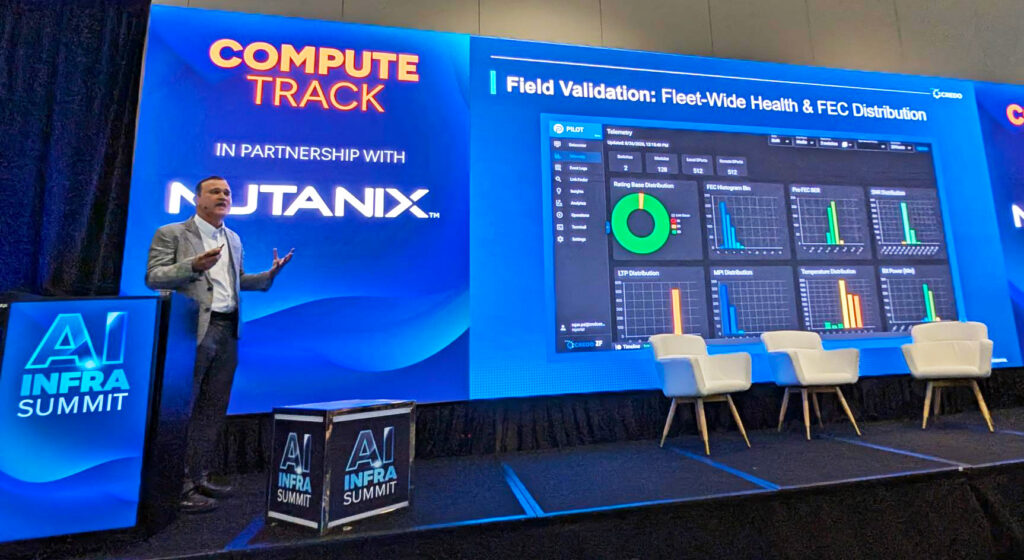
The value of combining them is that the DSP and SiPho PIC are co-optimized to reduce insertion loss and improve link margin, and the PILOT software makes that improved physical-layer performance visible and actionable — in real time, from either end of the link, without a technician on-site.
This matters beyond any one customer’s deployment. Because ZeroFlap’s telemetry is built on OCP-standardized reporting and works with SONiC and other switch operating systems, that visibility isn’t locked into a proprietary monitoring stack — it fits into the infrastructure operators already run. That’s an important distinction as volumes climb: industry analysts at Cignal AI forecast over 11 million 1.6T optical transceivers shipping in 2026, more than doubling in 2027. At that scale, manually chasing down marginal links isn’t an operational strategy — predictive detection has to be built into the hardware itself, standardized, and interoperable. That’s a challenge for the whole industry, not just for Credo’s customers.
Time to First Token
“Time to first token” starts well before a system actually runs — it includes every hour spent validating the fabric, hunting for marginal links, and re-cabling or replacing components before the cluster is trusted enough to go live. This is where the ZeroFlap combination pays off during bring-up:
- Bidirectional remote telemetry pulls real-time link health from both ends of an optical link from either endpoint, so diagnosing a marginal connection doesn’t require physically walking the data center floor.
- Non-volatile event logging gives operators a stored history of link performance trends, so intermittent issues that used to require days of manual monitoring can be diagnosed from historical data instead of waiting for the problem to recur.
- Proactive fiber with link-flap detection identifies weak links during fabric validation — before the cluster is handed off to a live workload, not after.
Less time spent hunting for marginal links before go-live means clusters reach that first token sooner.
From Faster Start to Longer Uptime
The same telemetry that speeds up bring-up keeps watching every link once the cluster is in production — trending degradation and flagging it before it turns into a hard failure or a flap. Every link flap avoided is a job that didn’t need to restart from its last checkpoint — GPU-hours spent computing instead of recovering.
“ZeroFlap Optics constantly monitor every link with built-in telemetry that detects warning signs to notify operators and avoid costly link flaps,” Credo VP of Product Ameet Suri put it when the 1.6T expansion was announced: “That means customers get their clusters running faster and keep them running longer.” That’s the whole point of pairing better optics with better visibility — the improvement isn’t just at launch; it compounds over the life of the deployment.
Explore the full ZeroFlap Optics portfolio to see how the 1.6T family fits alongside our 400G and 800G transceivers and ZF Active Electrical Cables, or read the full announcement for the technical details behind this launch.