One of the biggest stories to come out of this year’s sold-out OCP Global Summit describes an industry-wide problem in urgent need of an answer: AI data centers are missing a good mid-range interconnect solution — something reliable, energy-efficient, and cost-effective for distances beyond copper’s ideal range, but short of the long-haul reach traditional pluggable optics are built for.
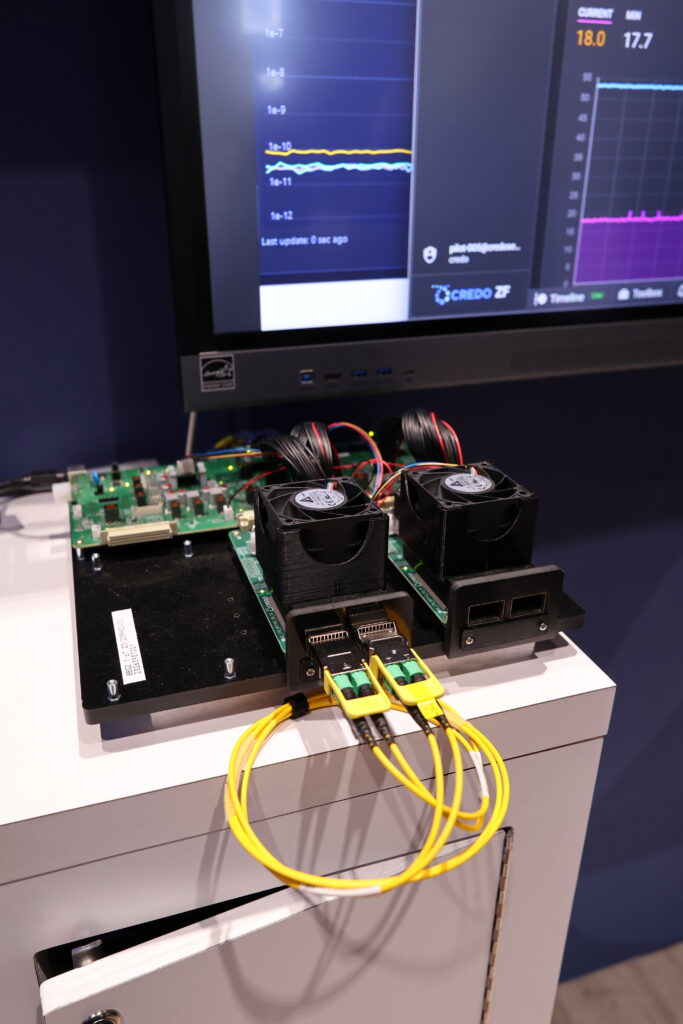
Credo’s answer to that problem — the 1.6T ZeroFlap Active Light Cable (ALC) and the micro-emitter optics platform behind it — drew a crowd everywhere it showed up this week at the San Jose Convention Center.
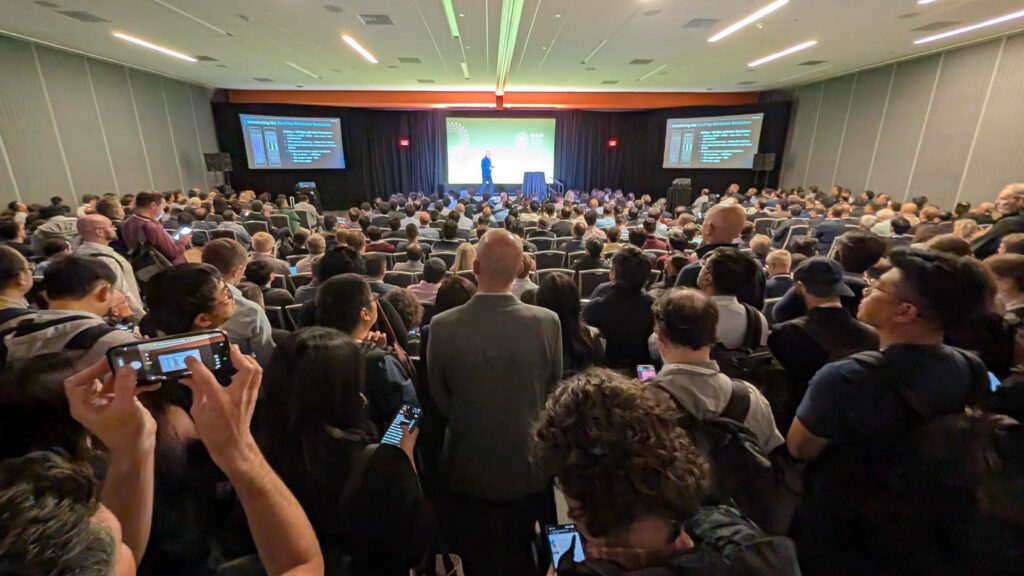
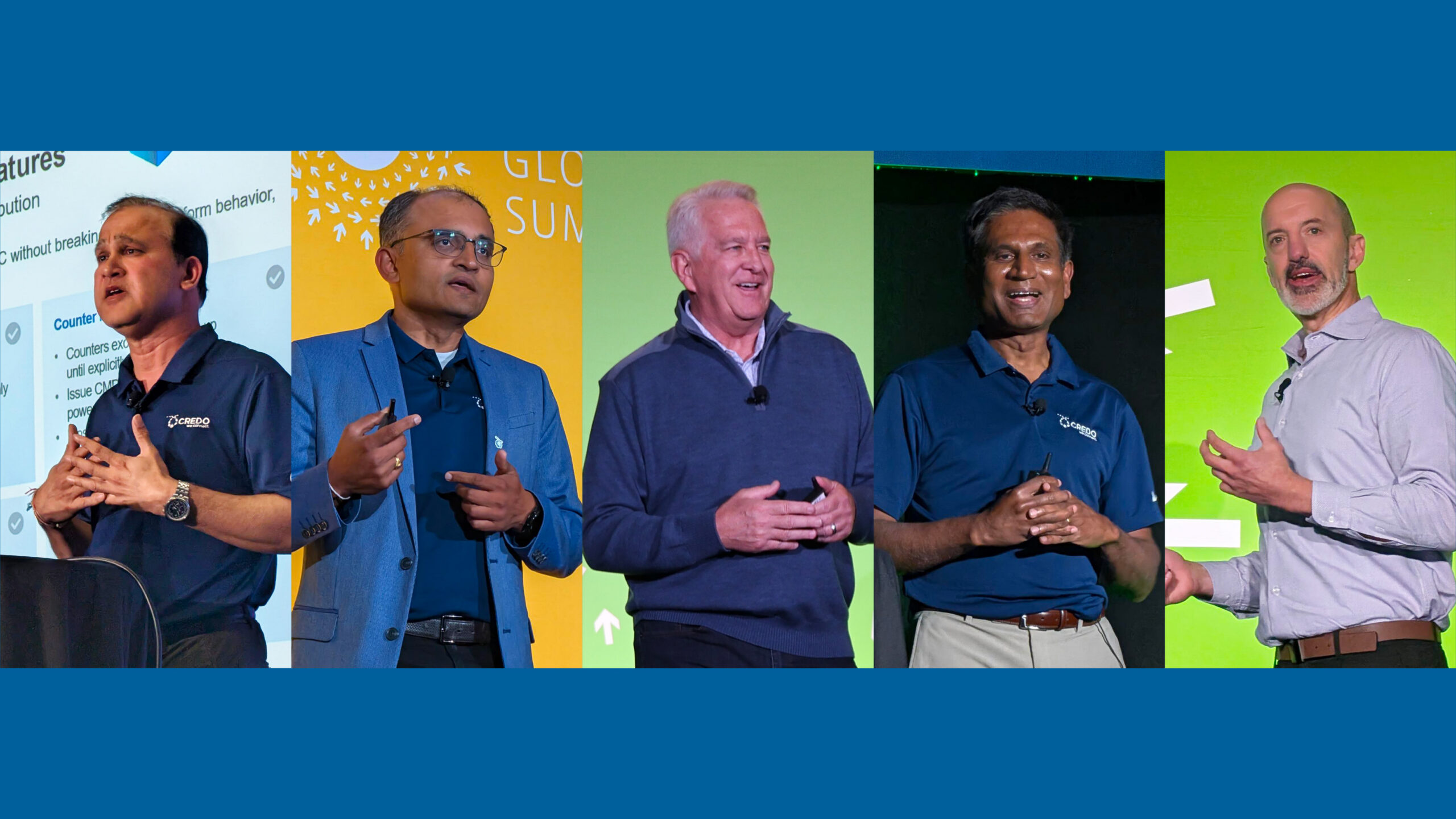
Credo CEO Bill Brennan’s speech, “Wider. Slower. Better: Optics That Can Beat Copper,” drew a standing-room-only crowd even before the show floor opened. AVP of Product LK Bhupathi’s Expo Hall session on the technology, “Going Wide: Scalable and Reliable Optical Interconnects for AI Clusters,” pulled a packed house of its own. And at the Credo booth, the ALC and a ZeroFlap blind-mate optical backplane were two of the most popular stops on the show floor all week. Wherever this topic came up, people gathered.
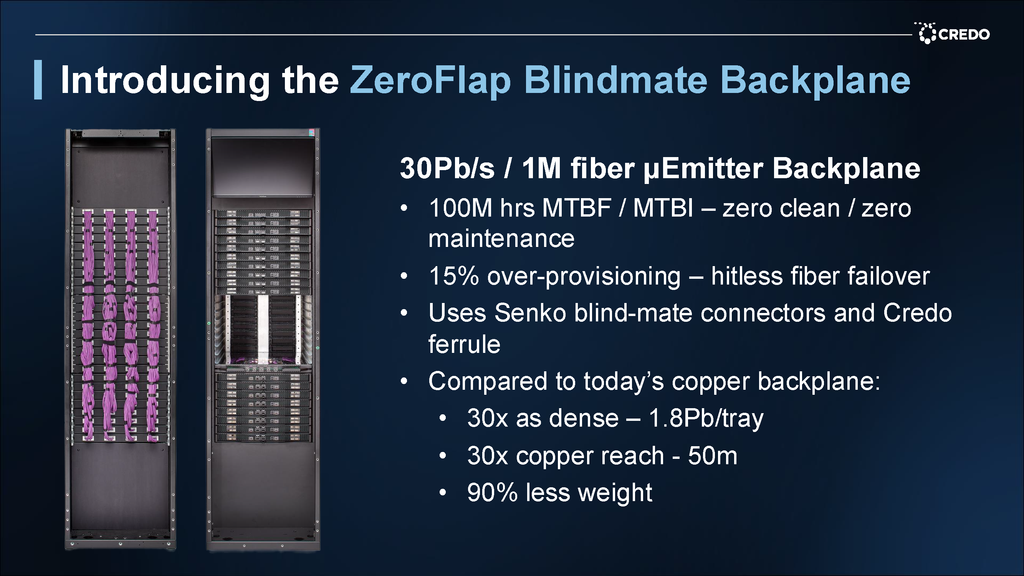
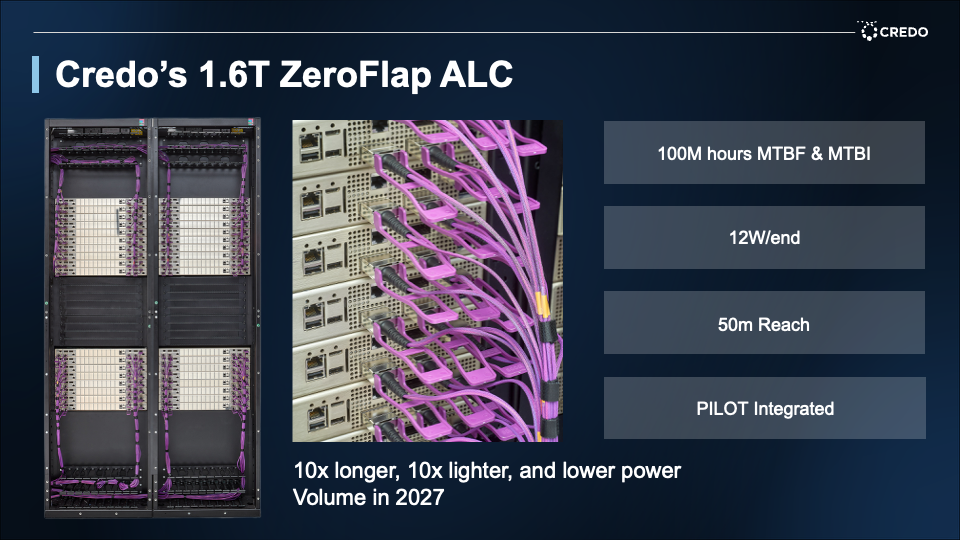
We covered our micro-emitter technology — what it is, how it works, and why it matters — in a blog published on Day 1 of the summit, so head there for the full deep dive.
The ALC was by no means the only thing from Credo drawing attention this week. It’s one expression of our many commitments that have defined the Credo brand — reliability as our North Star, building through collaboration rather than behind proprietary walls, and optimizing interconnects for where AI infrastructure is headed next. All of these found reinforcement in how well they were received at the show, from the presentations by our technical experts, to the announcements about new partnerships and workstreams, to the demos running live at our booth.
Reliability as the North Star: The Presentations
LK Bhupathi opened his Expo Hall session with math that made the stakes impossible to ignore. At a modest 20,000-GPU cluster, a transceiver mean time between failures (MTBF) that sounds reasonable on paper still works out to a failure roughly every five hours. Scale that to a million-GPU cluster, and it’s a failure every six minutes — nearly 80,000 transceiver failures a year. That’s the problem micro-emitter optics are built to solve: splitting each link into hundreds of channels, reserving about 15% as spares, and failing over instantly and invisibly the moment one starts to weaken.
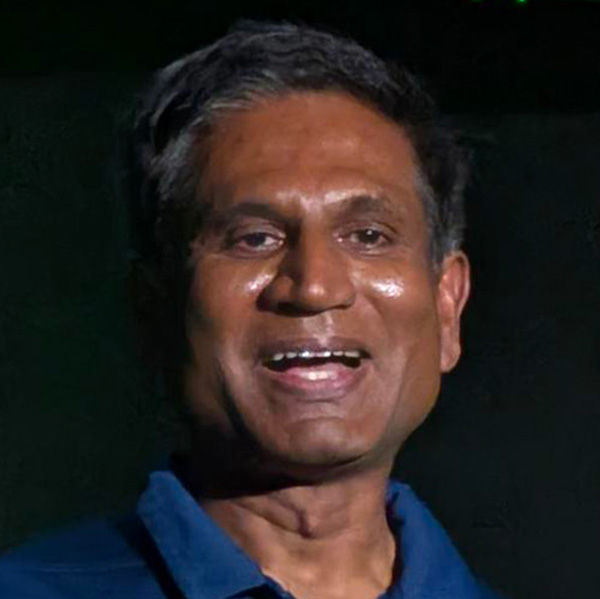
“A bad link impacts a large cluster of GPUs — the engine that makes money for this infrastructure. That’s why we need a highly reliable interconnect to scale.”
_
Watch the talk on YouTube.
Chris Collins, Credo’s AVP of Sales & Optical Product Marketing, presented “More Signal, Less Noise: Improving AI Cluster Returns Through Standardized Transceiver Telemetry in the OCP Optics Reliability Workstream,” walking through the workstream’s newly published Enhanced Telemetry Optics specification (v1.0) — six core capabilities distilled into a single, easy-to-read health score. He gave an example with a trial: 16 switch ports, 48 modules, and deliberately injected attenuation faults, all correctly isolated to the exact failing segment in seconds rather than hours.
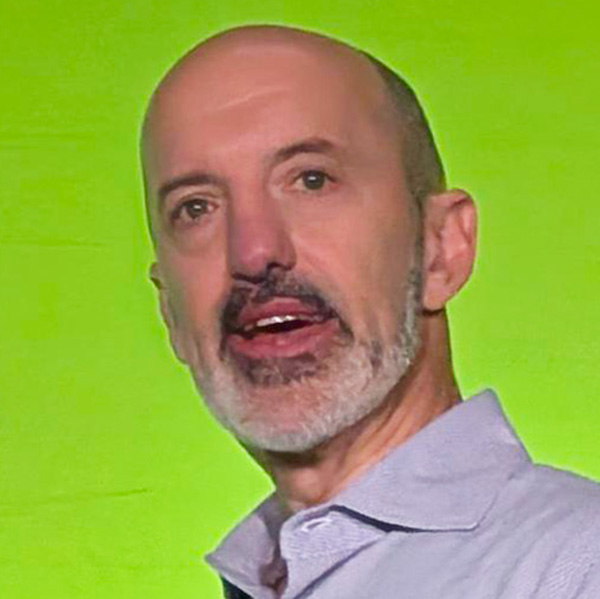
“Together, these capabilities let operators localize, explain, and remediate issues at hyperscale.”
_
Watch the talk on YouTube.
Rajan Pai, VP of Optical Solutions, took that same telemetry story into software with “Extending Community SONiC for Advanced Optics Telemetry Aligned with OCP Standards.” His team extended SONiC’s existing xcvrd container and VDM tables — no new SAI or YANG model required — so it’s backward-compatible with modules already in the field.
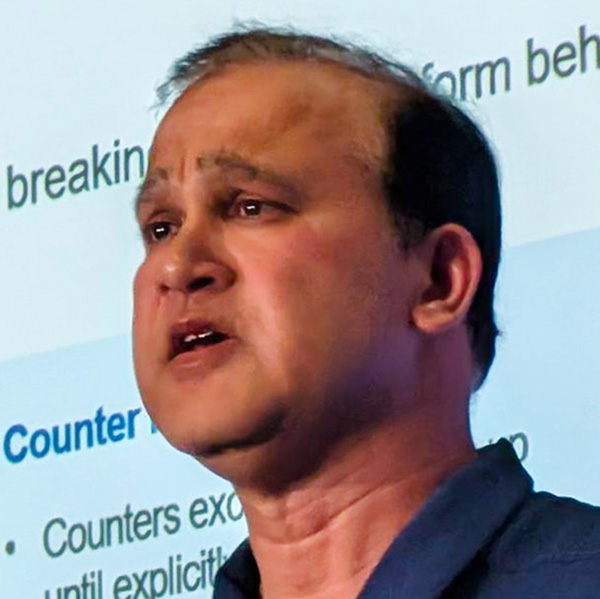
“SONiC is a practical and reliable model for extending and understanding optical telemetry — and we’re ready today for both 800G and 1.6T.”
_
Watch the talk on YouTube.
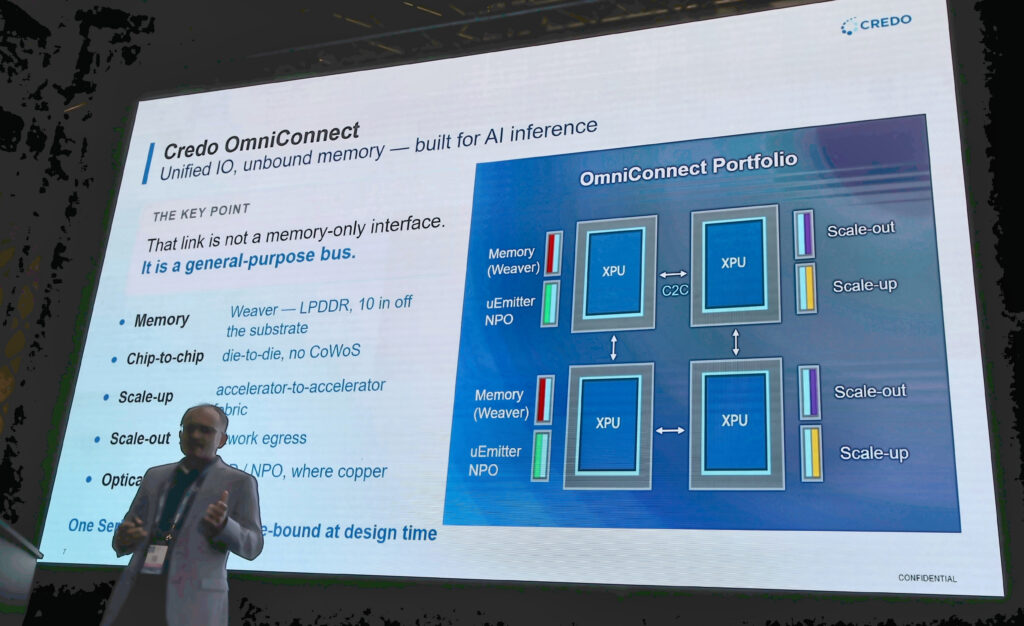
Vishal Shah, VP of Product, joined by Allan Cantle, CEO of Nallasway, introduced “An Open Lightweight Serial Interconnect for Composable AI Architectures” — a new specification standardizing the VSR-based, PCIe-derived framework already proven in Credo’s OmniConnect Weaver. The pitch: one lightweight interface that can serve as memory, chip-to-chip, or networking I/O depending on how a system integrator wants to use it.
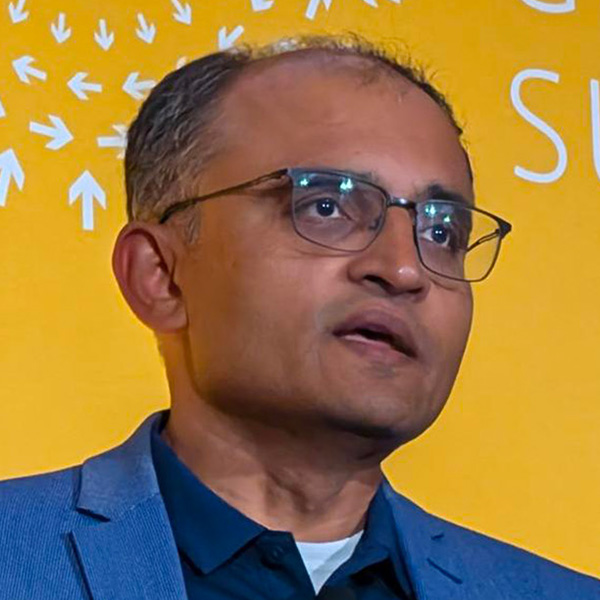
“Our mission is simple: create an open, low-power, modular serial interconnect ecosystem that enables the chip-like AI systems of the future.”
_
Watch the talk on YouTube.
Moving the Industry Forward, Together: Partnerships and Workstreams
Reliability only scales industry-wide if the industry builds it together — which is the thinking behind every workstream and partnership Credo announced this week. The OCP Short-Reach Micro-Emitter Optics (SRMO) Workstream, covered in full in our last blog, brought together a leading hyperscaler and partners spanning the entire optical stack to standardize micro-emitter optics as an open specification rather than a single-vendor product.
Vishal and Allan’s talk carried that same spirit into chip-to-chip and memory interconnects, outlining the Lightweight Serial Interconnect (LSI) OCP Workstream. The Workstream defines an open, low-power Very Short-Reach (VSR) serial interconnect to enable flexible, lower pin-count connectivity across chiplets, memory, and accelerators.
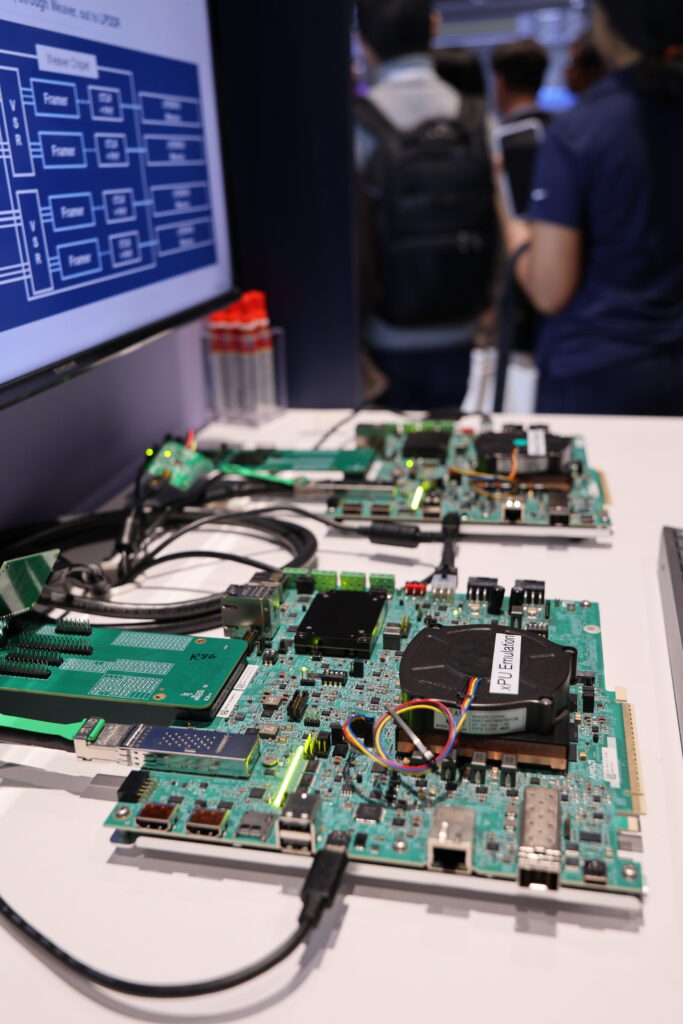
Credo and AMD built a working emulation platform running OmniConnect Weaver memory disaggregation on an AMD Versal AI Edge Series Gen 2 adaptive SoC, bringing terabyte-class LPDDR memory capacity and bandwidth to programmable-logic designs — on standard organic packaging, with no silicon interposer, and existing application software running unmodified.
On the show floor, the company showed what VSR connectivity can do in practice, demonstrating OmniConnect Weaver on an AMD Versal AI Edge Series Gen 2 evaluation board, where it gives a programmable-logic XPU terabyte-class memory without a silicon interposer or changes to application software.
Memory is what limits inference today, not compute, and the gap widens every generation. By combining the versatile AMD Versal adaptive SoC platform with Credo’s OmniConnect Weaver memory expansion technology, Credo is enabling customers to build scalable memory architectures that can unlock higher performance and greater efficiency for next-generation AI systems.
“This collaboration with Credo demonstrates how customers can unlock significantly more memory bandwidth and capacity on the AMD Versal AI Edge Series Gen 2 device while preserving the efficiency, power and time-to-market advantages of programmable logic-based designs,” said Manuel Uhm, Director of Silicon Marketing, Adaptive and Embedded Computing Group, AMD.
Optimizing for What’s Next: Demos at the Booth
The ALC and the ZeroFlap blind-mate optical backplane anchored the Credo booth all week — the clearest evidence that Credo is building for where AI infrastructure is actually headed, not just where it’s been. Alongside them, two more demos showed the same forward-looking focus.
The 1.6T Cardinal DSP + SiPho Integration demo answered a question a lot of the industry is asking right now: does vertically integrated silicon photonics actually play well with everyone else’s components in a real link? Pairing Credo’s 1.6T Cardinal DSP with an in-house silicon photonics PIC, the demo displayed multi-vendor interoperability on the show floor.
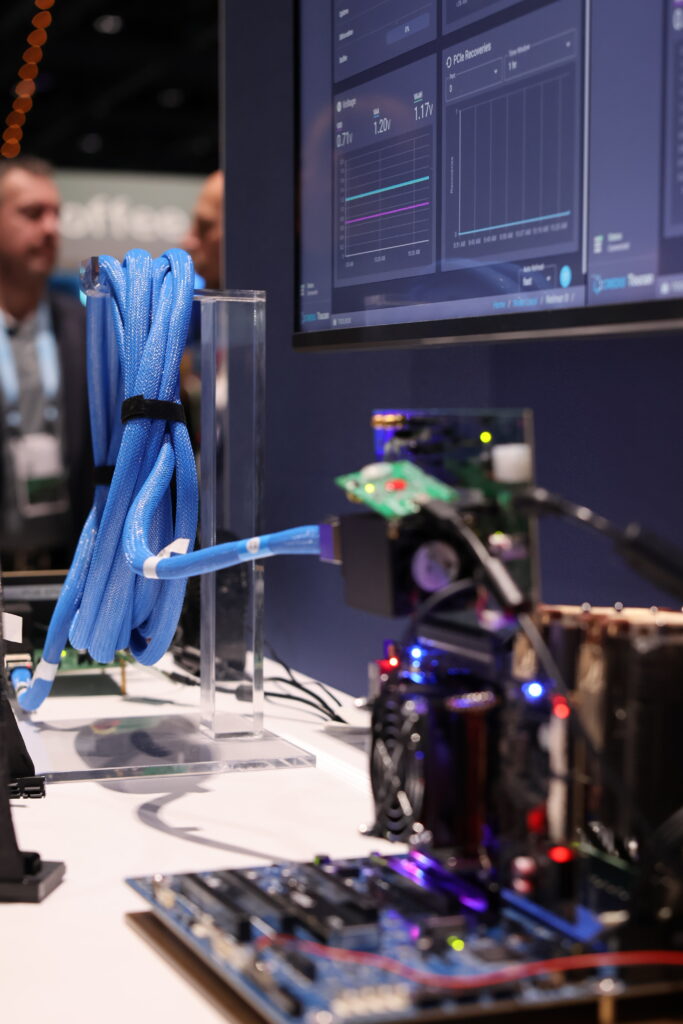
And the same telemetry-driven reliability extended to rack-level PCIe connectivity in the Toucan Gen6 PCIe AEC demo, bringing real-time PILOT telemetry and rapid fault isolation to GPU-intensive PCIe links, shown running on the Clearwater Forest (CWF) Intel platform.
Thank You, San Jose
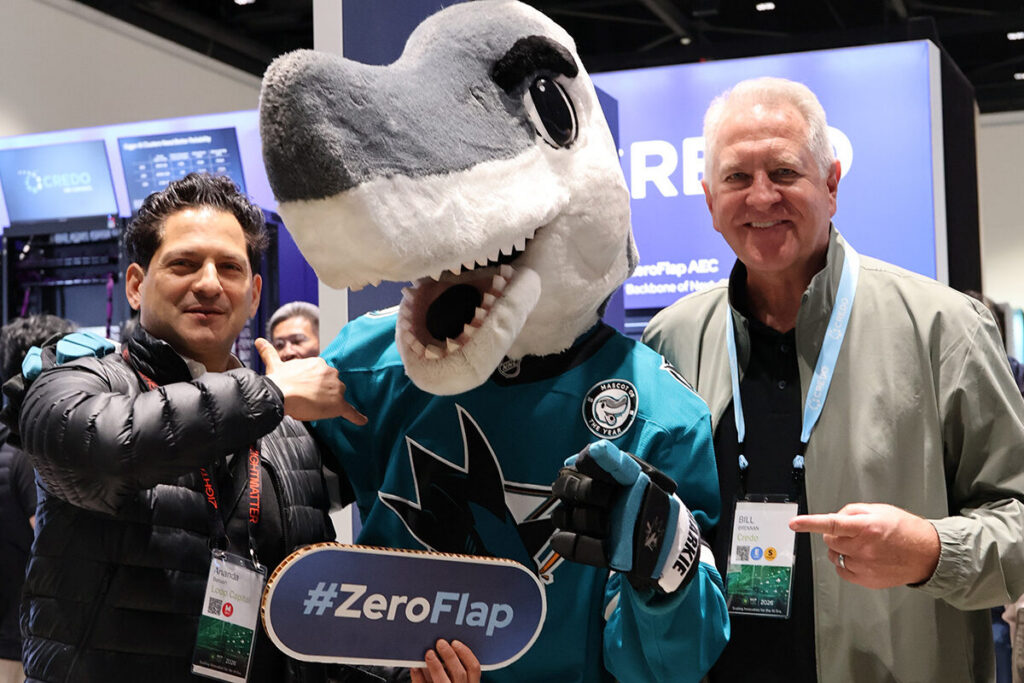
As if informative demos and insightful technical experts on the show floor weren’t enough, the mascot of the most electrifying young team in the NHL also created quite a buzz at the Credo booth. Sharkie from the San Jose Sharks swung by to take pictures with showgoers, hand out goodies, and check out what the hype was all about.
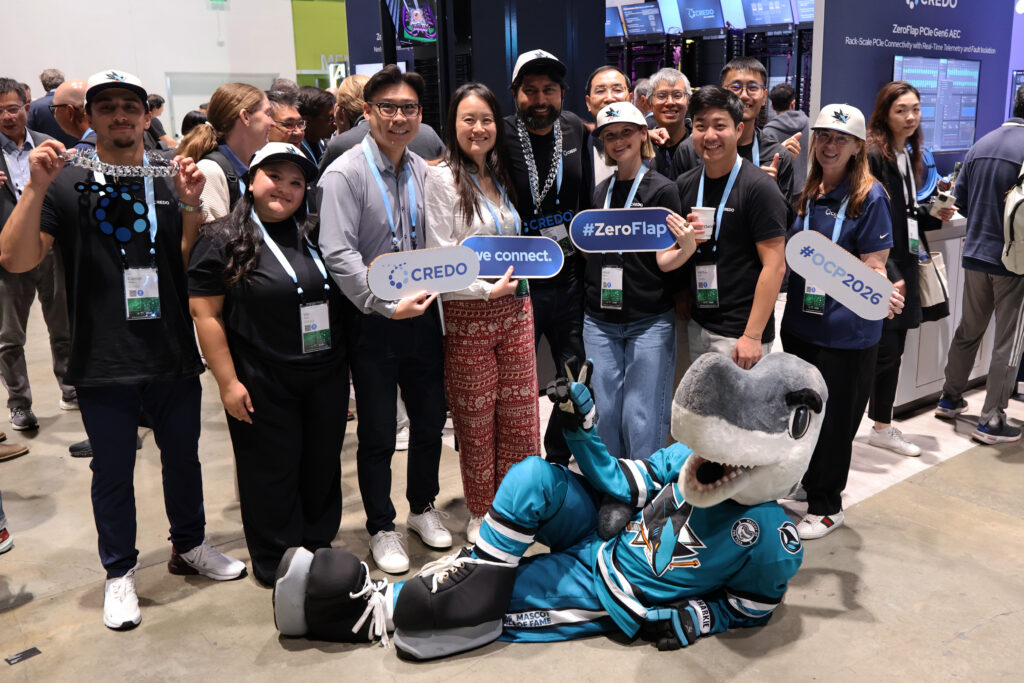
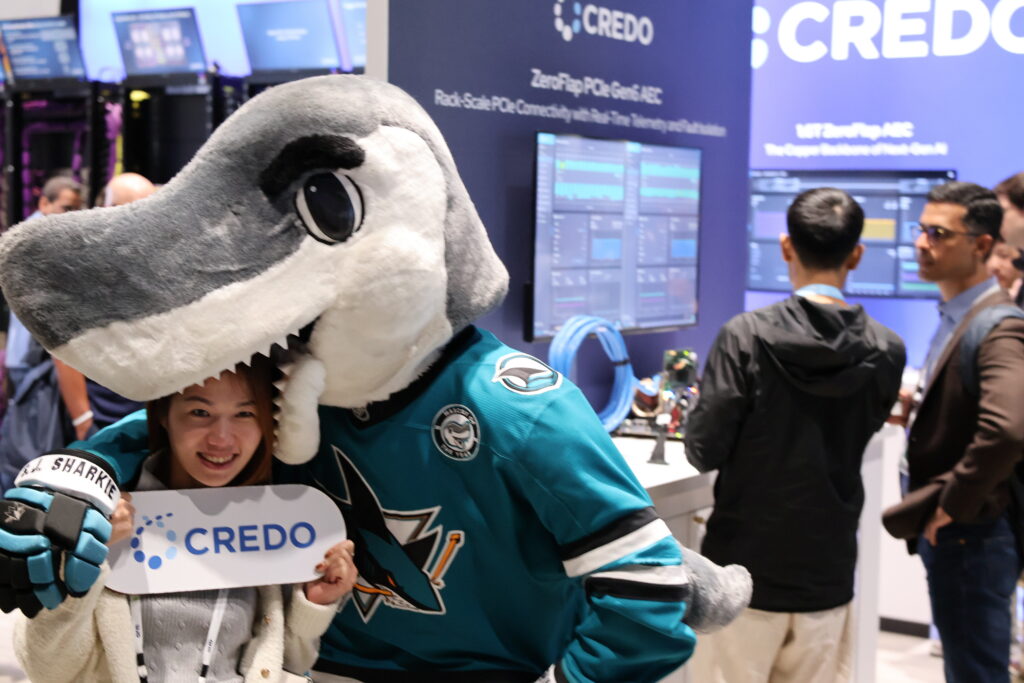
Thank you to everyone who made this week possible: our partners, customers, the OCP Foundation and the OCP Community, and every person who stopped by Booth B2, asked a question, or attended standing-room-only sessions. We’ll see you next year — at the Moscone Center in San Francisco.


Highlights from the Credo Booth
From packed presentations to a show booth that barely had room to walk, Credo was one of the busiest exhibitors at the summit this year. Our new booth sizzle reel captures what that looked like in person — the crowds, the demos, the conversations.